Home / Heat Gain Through Kitchen Windows
Heat Gain Through Kitchen Windows
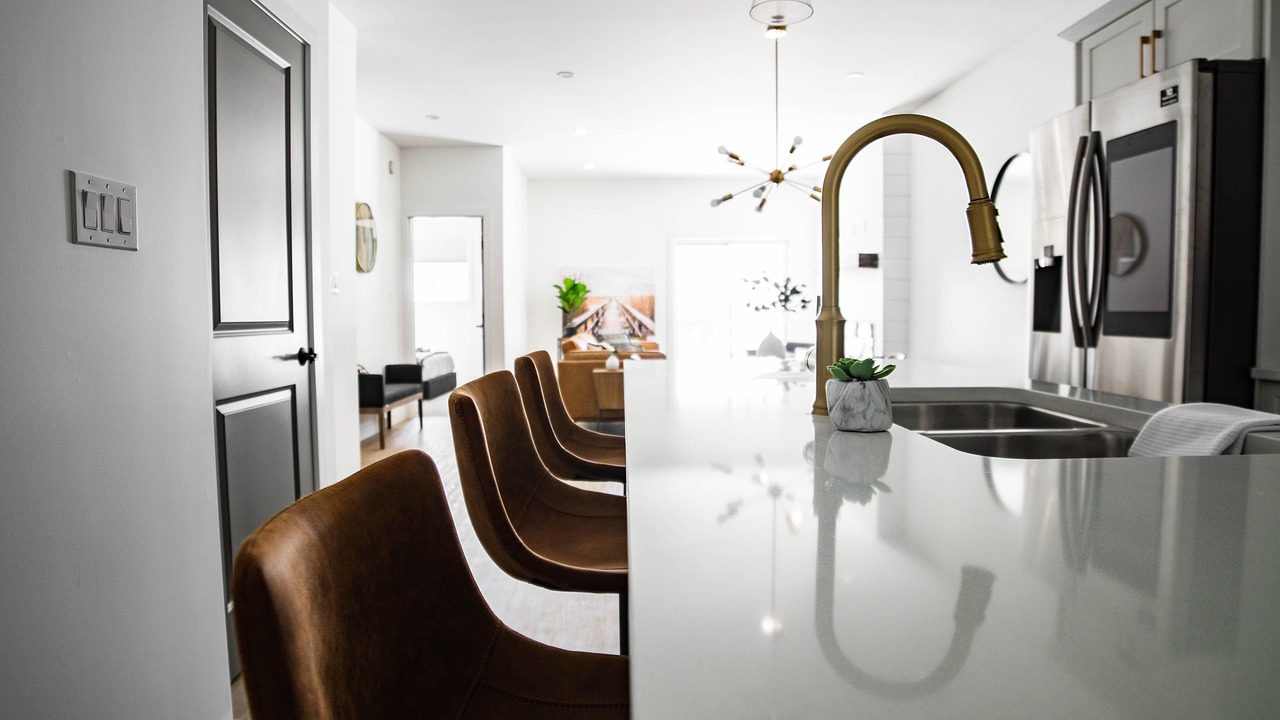
A kitchen with a big window facing the afternoon sun can feel ten degrees warmer than the hallway beside it, even while the air conditioner runs flat out. The glass is the reason. Sunlight passes through a window as short wave energy, lands on the counters, the floor and the cabinet fronts, and turns into heat that the room then has to get rid of. Understanding how that happens makes it much easier to decide which fixes are worth doing and which are not.
Where the heat actually comes from
Window heat gain has two parts. The first is direct solar gain: sunlight that travels straight through the glass and warms whatever it hits. The second is conducted gain, where a hot outdoor surface warms the glass, and the glass warms the indoor air touching it. In a hot desert climate the direct part usually dominates, because the sun is intense for most of the year and the angle on a west wall in late afternoon is nearly perpendicular to the glass.
A kitchen makes the problem worse than a bedroom would. Dark stone counters absorb light and re-radiate it. Stainless steel appliances bounce it around the room. Cooking adds its own load on top, so a room that is already carrying a few hours of afternoon sun then has an oven, a cooktop or a dishwasher venting steam into the same space. The window is rarely the only heat source, but it is the one that arrives first and stays longest.
Reading the numbers on a window label
Every rated window carries a sticker with a few values, and two of them matter here. The solar heat gain coefficient is a number between zero and one that describes how much of the sun's energy gets through. Lower means less heat enters. The U-factor describes how quickly heat conducts through the whole assembly. For a hot climate with strong sun, the solar heat gain coefficient is the figure to chase, and a low value is far more useful than a fancy frame.
Visible transmittance is the third value worth reading. It tells you how much daylight still gets through. A coating that drops heat gain but also makes the kitchen look like it is viewed through sunglasses is a poor trade, because a kitchen needs good light for cutting, reading labels and cleaning. The goal is a glass that keeps most of the light and refuses most of the heat.
Orientation changes everything
Before spending anything, work out which way each window faces. A north window gives soft, steady light and almost no direct sun in a hot climate. An east window brings strong sun in the morning, when the house is still cool and the extra warmth is often tolerable. A south window can be managed with a fixed overhang, since the sun is high for much of the day. The west window is the troublemaker. The late sun comes in low, goes under any modest overhang and floods the room just as the outdoor temperature peaks.
That is why the first move on many kitchens is not a window replacement at all. It is a hard look at the single west facing opening and the question of whether it needs to be that large, or whether it can be shaded from the outside.
Options, from cheapest to most involved
Interior coverings
Cellular shades and roller shades with a reflective backing cut some heat, but they work late. Once sunlight has passed through the glass it is already inside the building, and a blind only keeps part of it from reaching the room. Light colored, tightly woven shades help more than dark ones. They are useful as a fallback, though they should not be the main plan for a window that takes full sun.
Window film
Window film is a thin layer applied to the interior face of existing glass. A good solar control film can block a large share of the infrared energy while staying fairly clear. It costs far less than new windows and goes on in a day. Two cautions apply. A film must be matched to the glass type, because some dual pane units can crack from thermal stress if the wrong film is added, so the window maker's guidance should be checked first. Film also has a lifespan, and edges can lift or bubble after years of heat.
Low-emissivity glass
Low-emissivity glass has a microscopically thin metallic coating baked into the pane. Different coatings are tuned for different climates, and the version for hot regions is built to reflect solar heat. Replacing the glass or the whole window is the most permanent fix and delivers a measurable change, particularly when combined with a good frame and a tight seal.
Exterior shading
Blocking the sun before it reaches the pane is the most effective strategy of all, because the heat never enters the glass. Awnings, deep eaves, louvered screens and solar screens on the outside do this well. Fabric solar screens stretched over a frame can stop most of the sun's energy while keeping the view.
Where this fits in a kitchen plan
Homeowners often treat glass as a finish decision, picked late in the project. For a kitchen in extreme heat it deserves to come early, because it affects how large the cooling load is and therefore how the rest of the room should be arranged. The longer project articles on kitchen remodeling palm springs works show how that kind of early planning plays out in real homes, with the glass, the appliances and the ventilation all decided together.
Practical steps in a sensible order
- Note which windows face west and south and how many hours of direct sun each gets on a summer afternoon.
- Check the label or the paperwork for the solar heat gain coefficient. If it is high, shading is likely to pay off.
- Try the cheapest test first. Hang a light colored sheet outside the west window on a hot afternoon and feel how the room changes.
- Add exterior shade where the structure allows it, then consider film or replacement glass for what remains.
- Re-check the room temperature near the counter at the same hour after each change, so the result is measured rather than guessed.
Mistakes that waste money
The first common mistake is buying glass with a tint so dark that daylight in the room drops sharply. The cabinets then need more lighting during the day, and that lighting adds heat back. The second is treating the window in isolation. A kitchen with a well shaded window but a weak return air path or a poorly ventilated cooking area will still feel stuffy. The third is adding interior blinds and closing them all day. That keeps some sun off but turns a bright room into a cave without addressing the energy already inside.
A fourth, subtler mistake is ignoring the frame. A tight, insulated frame on a low heat gain pane still leaks if the perimeter sealant has dried and cracked. Dust and hot air find the gap, and the performance on the label never shows up in the room.
How shading and glass work together
The best results usually come from layers. An exterior screen or overhang takes the first hit. Coated glass handles what gets through. A light interior shade handles glare and the odd low angle. Each layer is modest by itself, but together they can turn the sunniest wall in the house from the hottest spot into an ordinary one.
Planning for heat gain also pays off in the way a kitchen is used. When the window is under control, the air conditioner cycles less, the refrigerator runs cooler, and the room stays comfortable for cooking in the evening. The investment shows up in comfort first and in the cooling bill second, which is a good order to get them in.
Questions homeowners ask
Is it better to shade the glass or replace it?
Where the structure allows exterior shade, it generally gives the biggest drop for the least money, because it stops the heat before it reaches the pane. Replacement glass makes sense when the window is old, leaking air or fogged between the panes.
Will film make the kitchen dark?
Modern solar films come in a range of clarity. Lighter versions barely change the daylight. Check a sample on the actual window at the time of day the room is used most.
Does a skylight count?
Yes, and it often counts double. A skylight faces the sky at the sun's highest point, so it collects heat for most of the day. If a kitchen has one, it deserves the same attention as the west wall, often through a shade or a coated pane designed for roof use.
Whatever the approach, the principle stays the same. Keep the sun outside, keep the light inside, and measure the room before and after so the next decision rests on evidence.